
Nearly every RNA workflow uses heat. Heat is required to denature RNA before electrophoresis, to anneal an oligonucleotide, to facilitate in vitro transcription (IVT) (although moderate at 37 °C), and to facilitate some circularization reactions. Used carefully, heat makes RNA easier to analyze and process.
In the wrong reaction mixture, however, the same heat can damage the molecule we are trying to measure or manufacture. Consider a familiar example. A purified RNA sample is heated to 70 to 80 °C before electrophoresis so that secondary structures do not distort its apparent size. A small amount of magnesium remains from the preceding IVT reaction and purification. During those few minutes at elevated temperature, magnesium-catalyzed cleavage begins to nick the RNA backbone. The gel then shows a smear below the main band, which is recorded as a purity problem. The smear is real, however the degraded RNA that led to the smear just may not have been present before the sample was heated.
Denaturation Is Reversible, Degradation Is Not
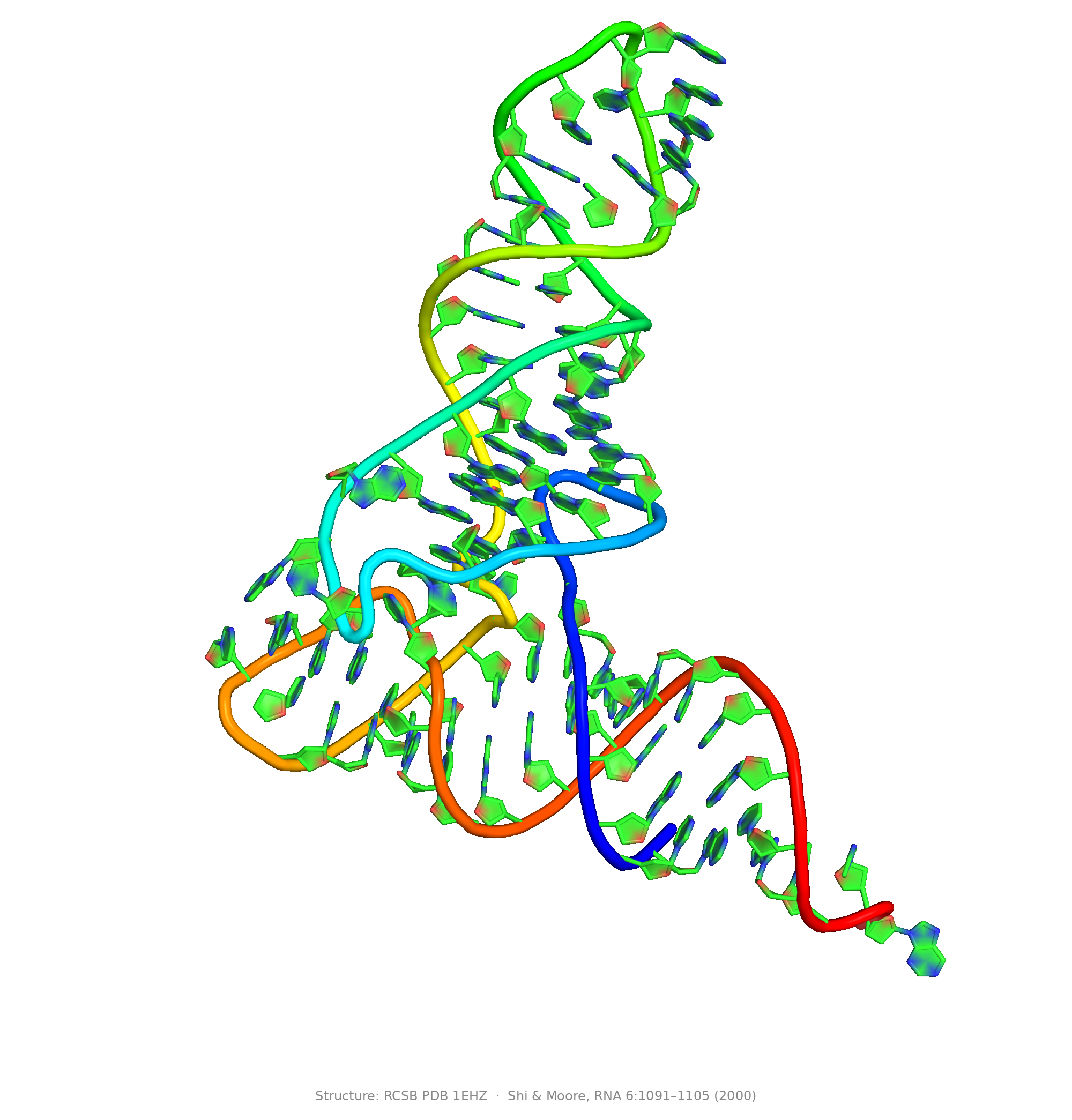
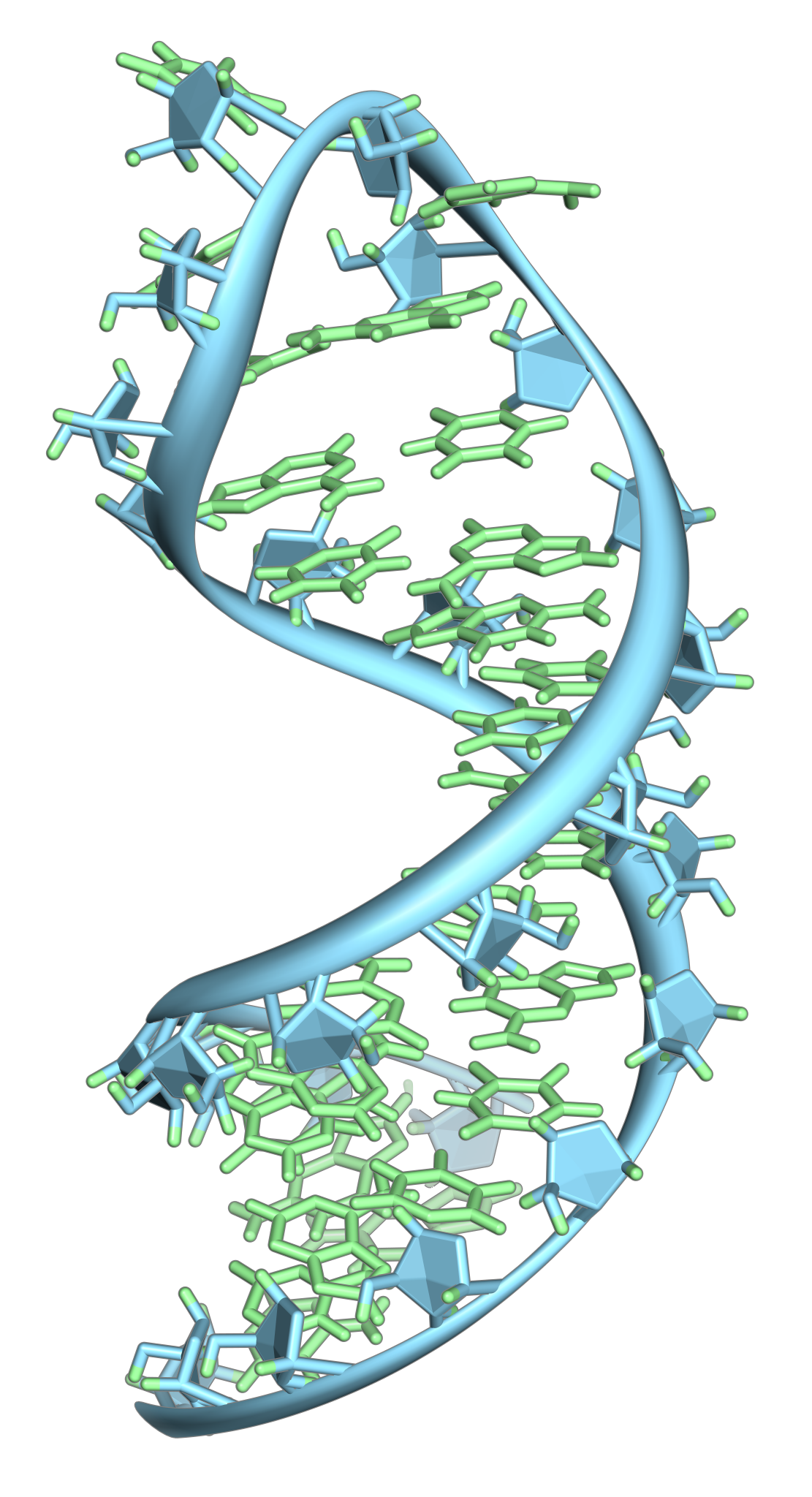
RNA is held together by two fundamentally different types of interactions. Noncovalent interactions, including base pairing and base stacking, fold an RNA strand into hairpins, loops, and duplexes. Heat disrupts these interactions. As the RNA cools, many of them form again. This reversible process is called denaturation. The other process wherein the phosphodiester (covalent) bonds that form the RNA backbone are cleaved, and where cooling cannot restore it, is irreversible and is called degradation.
A heated RNA sample can undergo both processes at once. Denaturation reaches a new structural equilibrium; degradation accumulates for as long as the RNA remains under damaging conditions. Temperature therefore tells only part of the story. The other components in the tube determine whether unfolding or cleavage dominates. There can be complete denaturation of RNA without degradation under certain solution conditions for a defined period of time and temperature combination.
Why RNA Is Especially Vulnerable
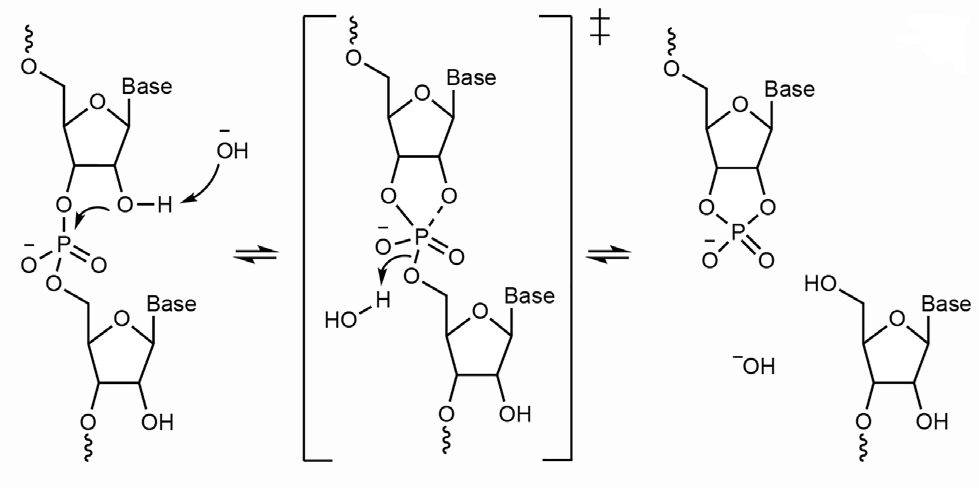
RNA’s sensitivity arises from one small but important difference between RNA and DNA: the 2′-hydroxyl group on the ribose sugar. When deprotonated, the 2′-oxygen can attack the adjacent phosphate in the RNA backbone. For cleavage to occur efficiently, the attacking 2′-oxygen, the phosphorus atom, and the departing 5′-oxygen must approach an approximately linear arrangement known as an in-line conformation.
Ribozymes accelerate this same chemistry by organizing the backbone into a reactive geometry. Ordinary mRNA has no catalytic active site such as the ones found in ribozymes, but flexible, unpaired nucleotides can transiently sample similar conformations. Higher temperature increases molecular motion and accelerates this underlying reaction. DNA lacks the 2′-hydroxyl group and therefore cannot undergo this particular self-cleavage pathway. DNA can still be damaged, but it is generally much more tolerant than RNA under conditions that promote backbone transesterification.
When Heat Helps Make RNA Measurable
RNA mobility on a gel reflects both length and shape. A compactly folded RNA may migrate differently from an unfolded or partially folded molecule of the same length, and two preparations of the same RNA can appear different if they adopt different structures. Denaturation reduces this structural variability. In that sense, heat can turn a structure-sensitive assay into a more reliable assessment of RNA length.
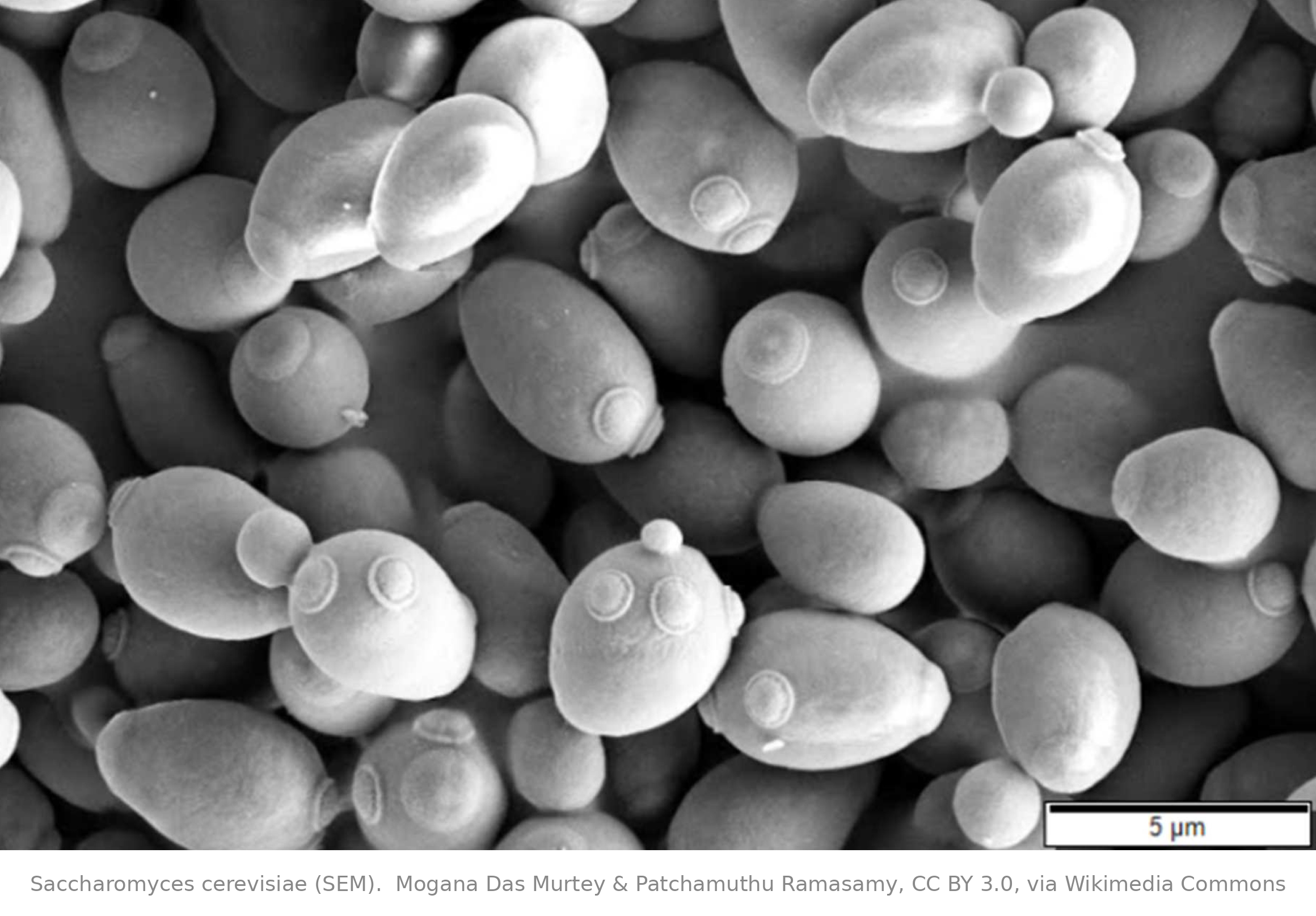
The effect can be striking during gel analysis. In our hands, yeast total RNA containing predominantly ribosomal RNA loaded without prior denaturation can remain near the well or resolve poorly. The same sample heated briefly at 80 °C in TE (10 mM Tris, pH 7.0 and 1 mM EDTA) resolves into discrete, quantifiable bands. Even after 15 minutes, we observed little to no detectable loss of the full-length species under these chelated conditions. The chelator is thus an important but sometimes forgotten detail. When brief periods of heating are required only to unfold RNA, residual divalent ions should be removed or sequestered first, using chelators such as EDTA.
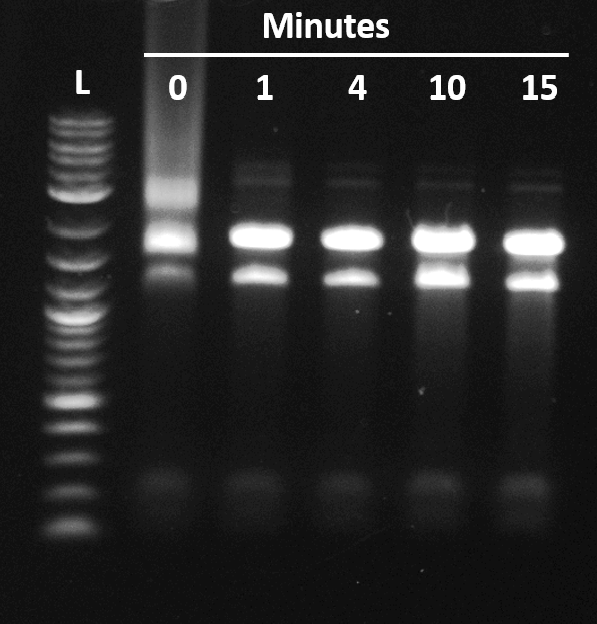
Native gels are not inherently wrong; they answer a different question. At Cisterna, we routinely use native agarose gels as a fast, gentle QC method when a sample can be compared with a matched reference. A native gel can report identity and purity consistently under a validated method, but it should not be assumed to reveal the true length of an unknown RNA. When a band is unexpected, running native and denaturing conditions side by side can often be informative.
When Heat Helps Enable a Process
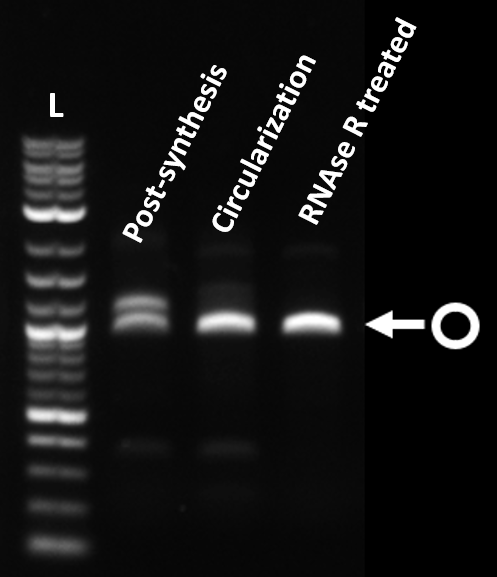
Heat is also useful during RNA manufacturing. A brief heating step can disrupt competing RNA structures before oligonucleotide annealing, hybridization-based capture, or enzymatic mapping (after cooling for this one!). Some circular RNA workflows provide a particularly clear example. In permuted intron-exon (PIE) circularization, the two halves of a group I intron must come together and adopt a catalytically active fold. Elevated temperature can reduce competing structures in a long precursor and promote productive folding and splicing (and more circles!).
But the reaction also requires magnesium. The same conditions that enable ribozyme activity can promote nonspecific RNA cleavage. Circularization therefore becomes a kinetic competition: the desired reaction must proceed efficiently before heat degrades a meaningful fraction of the precursor RNA. While the final RNase R treatment can remove single-stranded RNAs, it may not remove nicked RNAs that are intimately associated (base-paired) with circular RNAs.
When Heat Hurts During IVT
A typical IVT reaction is performed near 37 °C, at near-neutral or mildly alkaline pH, with millimolar concentrations of magnesium, for several hours. These conditions are necessary for the RNA polymerase activity, but they also create an environment in which newly synthesized RNA can undergo chemical cleavage.
The magnitude of that risk is easy to underestimate. A quantitative model reported by Wayment-Steele and colleagues produced the following estimates for a 4,000-nucleotide mRNA:
- 5 °C, pH 7.4, no Mg²⁺ - predicted half-life 941 days
- 37 °C, pH 7.4, no Mg²⁺ - predicted half-life 5.4 days
- 37 °C, pH 7.6, 14 mM Mg²⁺ - predicted half-life 0.084 days (~2 hours)
Source: Wayment-Steele et al. (2021), Table 1.
These are model-based estimates under simplified conditions, not direct measurements of RNA stability in an IVT mixture containing NTPs, Mg²⁺, monovalent ions, buffer, enzymes, DNA template, and other components. They nevertheless illustrate how dramatically temperature, pH, and free magnesium can influence the risk of backbone cleavage.
This creates a practical manufacturing problem: RNA synthesis and RNA degradation can occur in the same tube at the same time. Yield may plateau while degradation continues. Extending a reaction can therefore increase total RNA without necessarily increasing intact, full-length product. Short RNAs may in turn prime formation of long stretches of double-stranded RNA (dsRNA). Because long stretches of dsRNA are not normally present in mammalian cells, and they look like viral RNAs, even tiny amounts of dsRNA are known to induce undesirable innate immune responses in vivo.
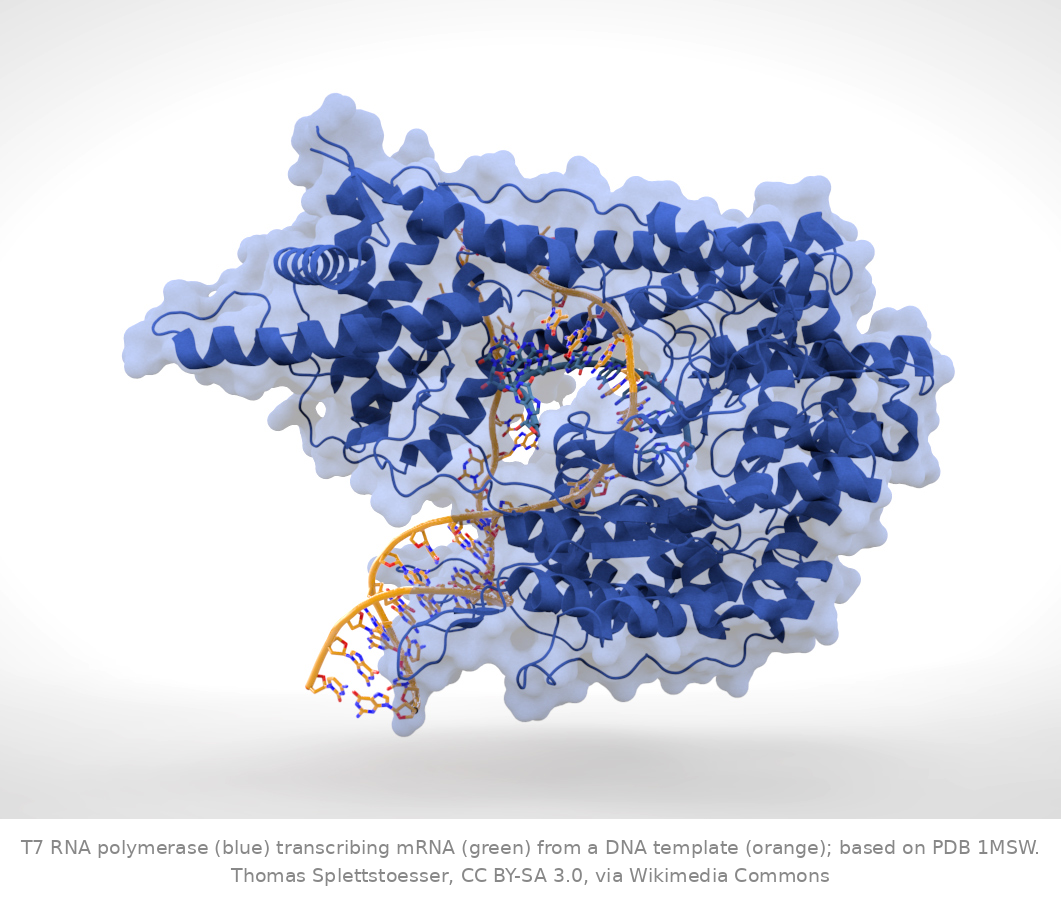
The same trade-off applies when changing transcription temperature. A higher temperature in combination with an engineered thermostable T7 polymerase may reduce problematic RNA structures or certain types of transcriptional byproducts such as dsRNA. But it can also accelerate backbone cleavage because of the presence of Mg²+. A lower temperature may better preserve integrity but reduce reaction rate or yield. A comprehensive evaluation of IVT synthesis must therefore measure full-length integrity, double-stranded RNA, short truncated products, yield, and a functional read out such as protein expression or enzymatic activity.
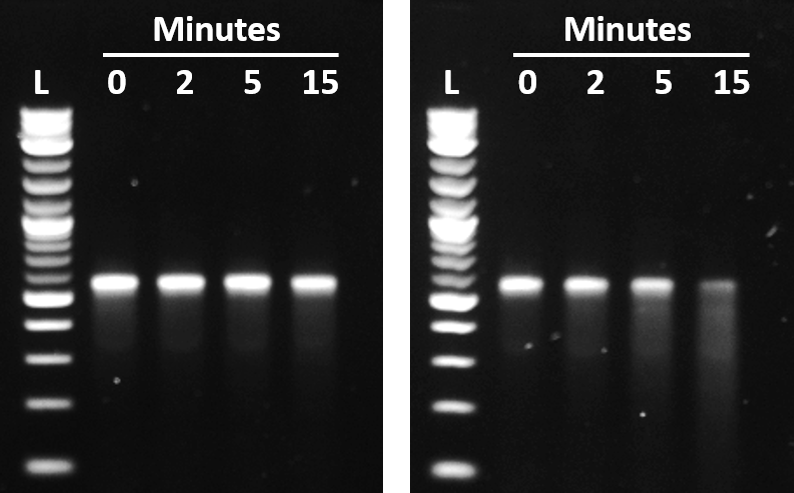
Outside a transcription reaction, the effect of Mg²+ on RNA during heating is easier to assess. Figure 4 compares the same RNA heated at 80 °C for 0-15 minutes in dilute TE or a 10 mM Mg²+ containing Tris buffer. The RNA remained largely intact in TE but shows increasing degradation in the magnesium-containing buffer.
What Else in the Tube Matters
Magnesium is a major variable, but it is not the only one. Free divalent-ion concentration. Total magnesium is not always the same as free magnesium. Nucleotides, pyrophosphate, chelators, and other reaction components can bind divalent ions. Both the type of ion and the amount available to interact with RNA influence reaction performance and degradation. pH at the operating temperature. RNA cleavage is base-catalyzed, so more alkaline conditions generally increase the rate. Buffer pH can also change with temperature. Tris has a relatively large temperature coefficient: its pH decreases as temperature rises. Other buffers, including MOPS and HEPES, change less. The relevant value is therefore not simply the pH measured on the bench, but the effective pH under the reaction conditions. Time. Denaturation can occur quickly, but degradation continues to accumulate. Five minutes and five hours at the same temperature are not equivalent. Sequence and structure. Flexible, unpaired regions sample the in-line geometry more readily than constrained, base-paired regions. Structure can therefore protect some linkages while leaving others exposed. Heat complicates this relationship: the same treatment that removes unwanted structure can also expose bonds to cleavage. Nucleotide modifications. Modified nucleotides can alter base stacking, folding, and thermal stability. Conditions validated for an unmodified transcript may not fully denature, or may affect differently, the modified RNA that is ultimately used.
Does Heat Improve mRNA Expression?
It is tempting to assume that unfolding an mRNA before transfection should improve translation by clearing a path for the ribosome. The reality is more nuanced. Stable secondary structure near the 5′ cap and within the 5′ UTR can impede translation initiation. Reducing structure in that region may help. We have indeed observed increase in protein expression of mRNAs heat-denatured and cooled immediately before transfection in cells. In contrast, structure within the coding sequence can increase functional mRNA stability (mRNA half-life extended) and, certain structured UTRs may enhance ribosome translation, both leading to increased protein output.
There is also a timing problem: RNA begins to refold rapidly after cooling and after exposure to ions such as magnesium. An mRNA heated before transfection is unlikely to remain globally unfolded until it reaches a ribosome. If heating improves expression, the treatment may instead have dispersed intermolecular aggregates or multimers. A change in expression should not automatically be attributed to a change in intramolecular folding; integrity and aggregation should also be examined.
Heat Does Not Solve RNase Contamination
Heating is not a reliable way to eliminate RNases. Some RNases are unusually stable, and others can regain activity after cooling. An RNA sample with trace RNases may therefore continue to degrade even after a high-temperature treatment. A paired EDTA control can help identify the likely mechanism. If adding EDTA prevents degradation, divalent-metal-dependent chemistry is implicated. If degradation persists, RNase contamination or another metal-independent pathway should be investigated. This control is informative, although it is not definitive on its own.
References
1. Wayment-Steele HK, Kim DS, Choe CA, et al. Theoretical basis for stabilizing messenger RNA through secondary structure design. Nucleic Acids Research. 2021;49(18):10604–10617.
2. Leppek K, Byeon GW, Kladwang W, et al. Combinatorial optimization of mRNA structure, stability, and translation for RNA-based therapeutics. Nature Communications. 2022;13:1536.
3. Martick M, Scott WG. Tertiary contacts distant from the active site prime a ribozyme for catalysis. Cell. 2006;126(2):309–320.
4. Mauger DM, Cabral BJ, Presnyak V, et al. mRNA structure regulates protein expression through changes in functional half-life. Proceedings of the National Academy of Sciences. 2019;116(48):24075–24083.